
What travel does to you
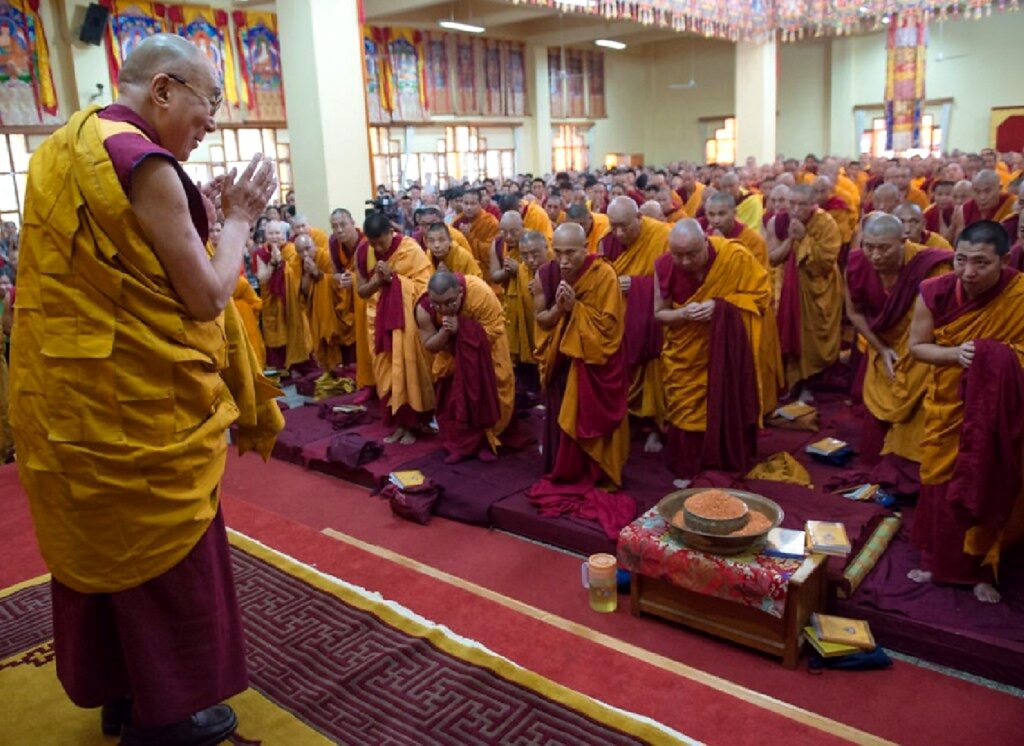
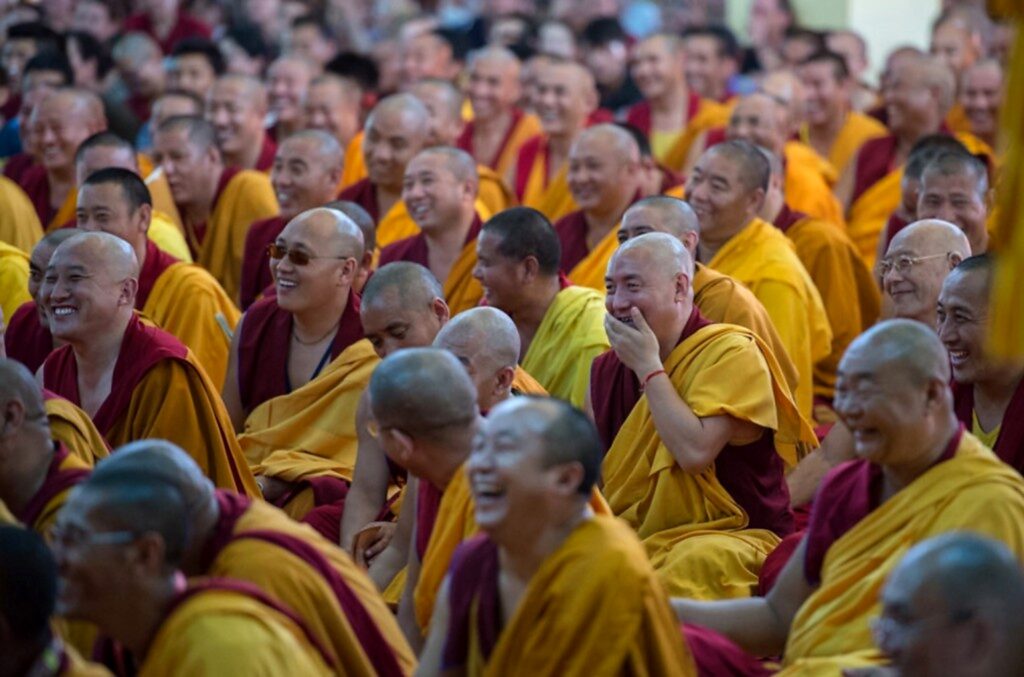
It is early when we arrive at the temple in Sidhbari, a small town just below Dharamsala in northern India. That morning, Pim and I have registered with our passports, two passport photos and ten rupees, less than fifteen euro cents, and we have received what we need: an entrance pass and an old FM radio for the translation. No phone, no camera, just ourselves, a bottle of water and the hope that maybe, if everything works out, we might catch a glimpse of the man I had wanted to see for years. Inside, hundreds of monks are sitting in rows on the floor. We find a place about twelve metres from the chair at the front and sit down. The monks are already meditating. At one point I think I see him, but his chair is empty and he is sitting so low among the monks that I think I must be imagining it. After forty-five minutes, everyone stands up. And only then do I see it. He had been sitting there the entire time, low to the ground, almost invisible from where we were sitting. His Holiness the Dalai Lama. With his kind smile, he stands up, walks away with his attendants and waves in our direction. I could hardly believe I had been sitting so close. His presence in that small mountain village brought a calm into my body that I had never experienced in quite that way before.
Eight years later, an FM Radio
Eight years earlier, I stood in front of the Potala Palace in Lhasa for the first time. I was 26 and had already been travelling for months with friends, taking the Trans-Mongolian Express through Russia and Mongolia to China and Tibet. That journey was not just a route. It was the journey I had dreamed of for years, shaped by books about China, stories of the Silk Road and, above all, my fascination with Tibet and the Dalai Lama. When we entered Lhasa from the station and saw the Potala Palace lying against the mountain, I had one of those moments when you are not sure whether you are looking at a place or at an image that has lived in your mind for years. In front of the palace, I saw people praying on the stones. They began at the start of the street, crouched down, stretched out their arms, lay flat on the ground, stood up again and repeated the same movement two centimetres further on. All day long. After three hours, they were halfway down the street. I stood there watching and did not quite know what I was seeing. Not the ritual, because I had read about that, but the devotion. The absolute trust that what you do has meaning, even when you cannot see the result. There, in front of the Potala Palace of the Dalai Lama, I knew I wanted to see him one day and attend his teachings. Not as something to tick off a list, but because Tibet had touched something in me. Later, during that same journey in India, it did not happen. I let the wish go.
Apparently, you simply had to be there
In 2015, I travelled through India again, this time with Pim. By then I was working as a tourism strategist. During that trip, I kept an eye on the Dalai Lama’s schedule. There were no teachings planned in Dharamsala, so I had accepted that I would probably have to return especially for that one day. On our first evening in Dharamsala, someone at the hotel told us he was there. Two days earlier, he had started teaching at the Gyuto Ramoche Temple in Sidhbari, and the next day would be the final teaching. Later, we found out that the announcement had been made a week earlier, but not on his public website and not in the newspapers. Apparently, you simply had to be there to know.
For five hours, we sat on the floor of that temple. The Dalai Lama spoke for hours about Tibetan Buddhist texts. In between, he made jokes, and the laughter of hundreds of monks rolled through the room before we understood why through our FM radio. A few times, I let the words go. When I briefly left the temple, I saw even more monks outside, sitting on the grass around the building in their red and yellow robes, following the teachings through loudspeakers. The calm, the silence, hundreds of people gathered in stillness. This was the wish I had let go of years earlier. And now I was here.
Travel teaches you to see beyond simple truths
That is what travel does to you. Through detours, encounters and moments when you have no choice but to let go of what you thought you knew. Travel has not made me run away from life. It has taught me that there is not one single truth. People all over the world deal with the same big things: love, loss, hope, family, faith and safety. But the way they deal with those things is shaped by culture, religion, nature, history and the place where they were born. Through all those conversations, customs, backgrounds and ways of seeing, I have not become less outspoken, but I have become less black and white. Or perhaps it is better to say: greyer. Not vague, but more layered.
When I travel, I consciously choose the unknown. India, Socotra, Bhutan. Places where you step out of your bubble and suddenly find yourself in the middle of someone else’s life. In Bhutan, my guide Ugyen and driver Jamyang not only took care of the logistics flawlessly, but also gave me a glimpse into their daily lives, dreams, families and values. During the trip, Ugyen often had to wait because I kept stopping to take photos. Casually, I started giving him tips on composition and light. Months later, I saw on Facebook how he had gradually begun taking more photographs himself. Now he shares his own images. Something that felt ordinary to me turned out to be a new way of seeing for him. That is what travel gives me, and what I also give back to it: conversations that stay with you, exchange that moves in both directions, and the awareness of how connected we all are. That exchange is also what I see as the driving force behind identity travel.
Finding yourself begins with the other
People no longer travel only to see something, but to understand something about themselves. That is not new. Pilgrimages have existed for centuries. But in a time when many people are searching for direction, slowness and connection, travel is once again gaining a deeply personal layer.
For me, identity is not a profile, a target group or a label. Identity does not emerge by placing yourself at the centre, but by noticing how you respond to the world around you: to the people you meet, the places where you feel at home or do not, the rituals you understand and the customs that make you uncomfortable. I have felt this most strongly in Asia. It is my favourite part of the world because of the people, the cultures, the spirituality and the way many societies are still more naturally interwoven with nature, family and community. India is my favourite country within that, not because it is easy, but precisely because it is not. India cannot be controlled. You have to feel, adapt, trust your senses, the look in someone’s eyes, the energy of a street. Bhutan does something different to you. From the moment I entered, I felt that I became part of something that went beyond a tourism story. The longer I stayed, the more I began to reconsider my own priorities. These are abilities we sometimes lose in the West.
You cannot promise transformation
This is exactly where it becomes interesting for destinations. Destinations can respond to the desire for meaning, but they have to be careful not to package meaning as a product. Real transformation cannot be promised. What I see again and again in my work is that a destination often no longer sees what makes it unique, precisely because it has become so ordinary to the people who live there. They look for innovation or look at what competitors are doing, while the story is often much closer than they think. If you know how to find it and combine it intelligently with the marketing of today, that is where something powerful happens. Identity travel only becomes interesting when it is not just about finding yourself, but also about learning to see what you are part of. Not the traveller at the centre, but the relationship between the traveller and the place. So that the people who carry that place also benefit from the attention their culture, landscape or way of life evokes.
What you pass on
I try to pass that reciprocity on at home as well. Since becoming a mother, another layer has been added. My children travel with me to places where other parents sometimes raise an eyebrow. Not despite their age, but precisely because of their age. Children look without filters. They play with other children without first wondering what language they speak, what faith they have or what system they come from. At the same time, travelling with children forces me to explain the world all over again. Why people pray differently. Why some children have less. Why nature is sacred in one place and needs to be protected in another. Why we are guests somewhere and therefore need to adapt. That makes travel not only a personal experience, but also a way of raising children.
One hundred countries, and still not done looking
This summer, we are travelling as a family to North Macedonia and Bulgaria. Bulgaria will be my official one hundredth UN country. I am looking forward to it. Not because I know what it will bring me, but precisely because after all those countries, I know that meaning only emerges along the way. What I do know is that the most beautiful moments of twenty years of travel were never the moments I had planned. They were the moments when I stopped searching and saw what was already there. In front of the Potala Palace, where people moved centimetre by centimetre from a trust greater than words. In the temple in Sidhbari, where I thought I was still waiting for his arrival, while he had been sitting there all along. Perhaps that is ultimately what travel does to you. It does not only teach you to see new places. It teaches you to look again at yourself, at others and at the world you are part of.
Photo credits for all images: www.dalailama.com
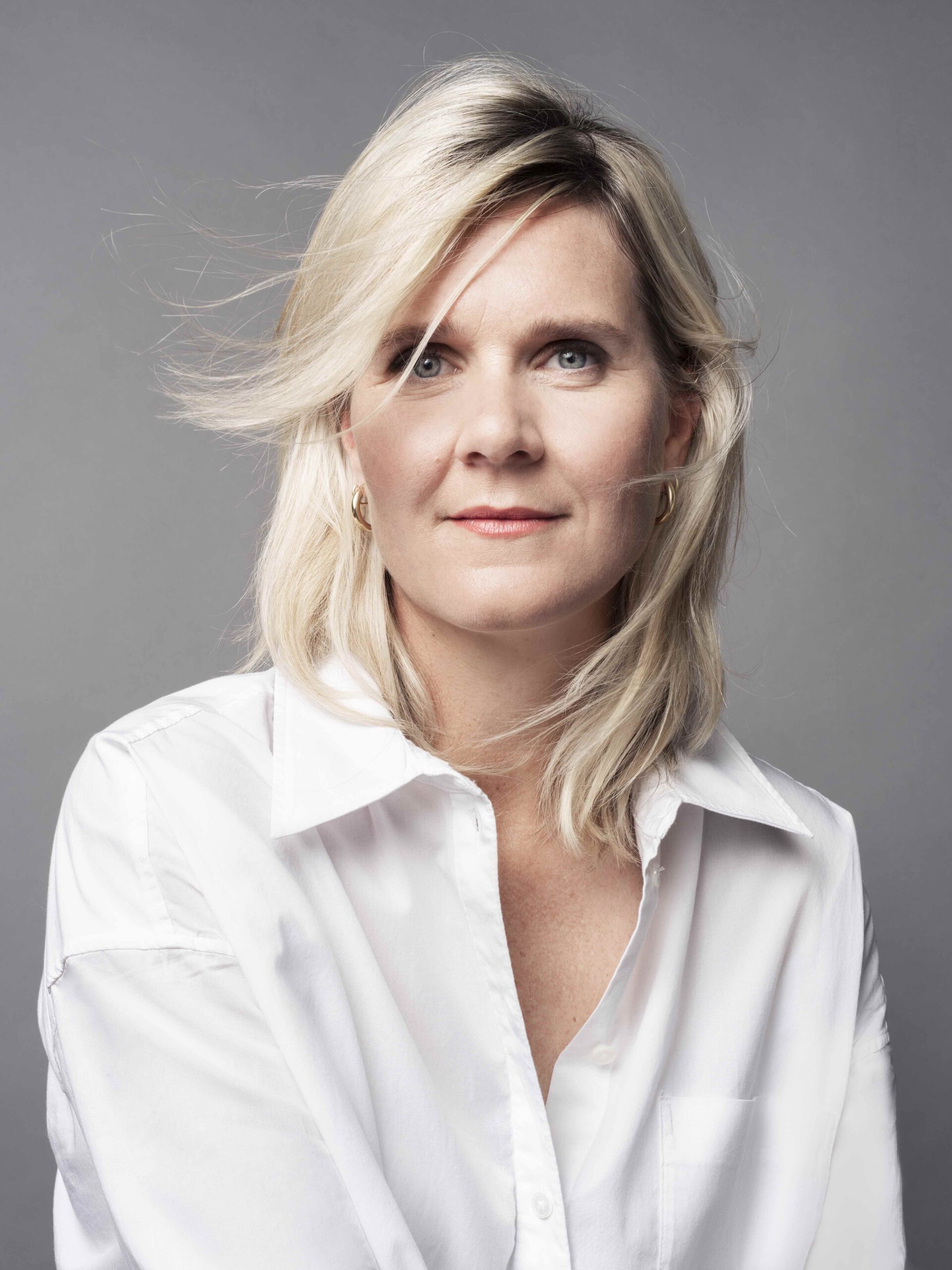
Isabel Mosk is a tourism strategist and founder of Sherpa’s Stories. She has worked for more than 50 destinations worldwide and advises organisations on tourism trends, strategy, positioning and storytelling.