Solo travel with impact: women choose their own path
According to a Condé Nast Traveler report, the number of women travelling solo worldwide rose by 45 percent over five years. Platforms such as Airbnb and Booking.com have also reported a clear increase in searches by women for solo accommodation. The direction is clear: more women are choosing to travel alone, not out of necessity, but from conviction and on their own terms.
Solo travel has quickly evolved from an exception into a powerful expression of freedom, self-determination and personal growth. It means travelling on your own terms, with room for reflection, adventure and connection.
Freedom as a reason to travel
Solo travel was once associated primarily with backpackers in their twenties. Today, a much broader group of women is choosing to explore the world alone. They range from young professionals seeking independence to women over fifty reshaping their lives after a divorce or career change. This is not a passing trend, but a fundamental shift in how travel is experienced.
A wider social movement lies behind the rise of solo travel. Women increasingly choose experiences that free them from expectations, routines and prescribed roles. Travelling alone means taking the wheel, both literally and figuratively. It means making room for personal wishes without depending on a partner or group of friends.
Research suggests that freedom, self-care and personal growth are among women’s main motivations for travelling. These motivations transcend age and background. What connects these travellers is the desire to engage with the world in a way and at a pace that feel right for them.
At the same time, this form of travel is not necessarily solitary. Travelling alone does not mean being alone. It offers the freedom to decide when to seek company and when to choose silence. That freedom is precisely what makes solo travel so valuable.
Travelling with confidence
Although solo travel is becoming more popular, safety remains an important factor. Women often choose destinations known for their hospitality and stability. Ireland, Sweden, Japan and Canada, for example, regularly appear on lists of safe countries for solo travellers.
The travel industry is responding more effectively. Women-focused travel companies, small women-only group trips and accommodation providers that actively welcome solo travellers are lowering the threshold. This is not about protection, but recognition. Transparency, clear information and an atmosphere of trust make the difference.
For many women, confidence grows with every journey. Making independent choices, handling unexpected situations and navigating unfamiliar places all strengthen a sense of autonomy. Solo travel is not only a way to explore the world, but also a way to understand yourself more deeply.
Travel as personal transformation
For many women, solo travel is more than a holiday. It becomes a moment of reorientation. Away from expectations and routines, space emerges for reflection, inspiration and new perspectives.
Transformation often happens not through grand experiences, but in unexpected moments: getting lost in an unfamiliar city, joining a local dinner or having a spontaneous conversation at a railway station. For some, value lies in peace and contemplation during a retreat or pilgrimage. For others, it lies in adventure, such as a trek or a journey beyond the comfort zone.
Travelling alone means loosening the grip of the familiar and making room for who you truly are. It is not about escaping, but about taking your place.
Connection without obligation
Autonomy and connection are not opposites. Many solo travellers seek contact with others, but on their own terms. This balance between solitude and shared experience matters to many women.
New travel formats respond to that need. Small-group trips for solo travellers, women’s communities and platforms for meeting like-minded people create opportunities for connection without obligation. The freedom to join in, but also to keep some distance, remains central.
As a result, the social dimension of solo travel gains more depth. Encounters become less fleeting and more intentional, often leaving a lasting impact.
How solo travel is changing tourism
The rise of women travelling alone is changing the tourism landscape. Hospitality needs to become more inclusive, serving not only couples and families, but individual travellers too. This means paying attention to safety as well as social accessibility. A solo traveller wants to feel welcome in a restaurant, on an excursion or at an accommodation, without feeling that she does not fit the expected picture.
For destinations and travel organisations, this calls for a different approach. Rather than standardising the experience, they need to offer flexibility and room for personal choice. Above all, the tone should convey respect. Travelling alone is not a second choice, but a conscious and powerful one.
Solo, but not alone
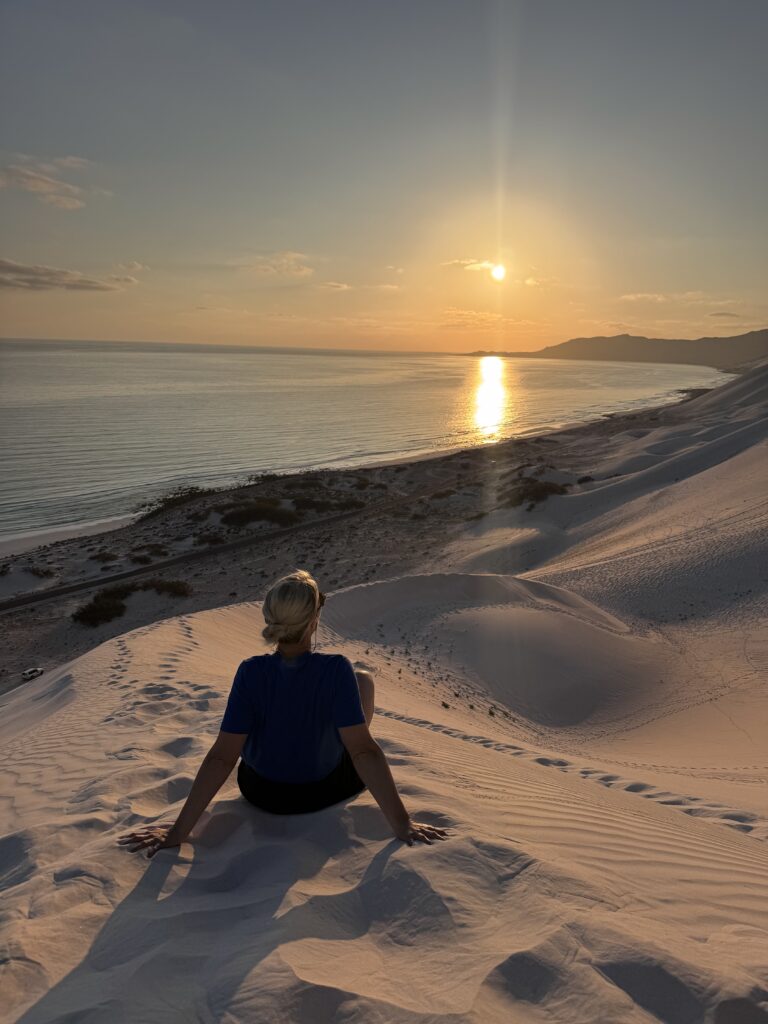
In spring 2024, I travelled to the remote island of Socotra, part of Yemen, with a group of like-minded women. The journey was adventurous and intense, but also safe and inspiring. What stood out was the atmosphere of trust and the freedom to follow your own path within a shared experience.
Everyone had her own reason for travelling, but openness and respect for one another’s boundaries created a close-knit group. We swam in turquoise bays, walked through landscapes that seemed almost otherworldly and shared stories around the campfire.
It was both intense and clarifying. The journey showed that adventure, safety and connection can exist together, especially when women support one another.
Travel whose impact reaches further
Solo travel by women is no longer a niche. It is an enduring development connected to wider themes such as emancipation, self-care and cultural openness. It creates space for personal growth and for a renewed appreciation of the world around us.
Women who travel alone do more than step into the unknown. They choose their direction, set their pace and make room for what matters. The impact often extends far beyond the journey itself.
Isabel Mosk is a tourism strategist and founder of Sherpa’s Stories. She has worked for more than 50 destinations worldwide and advises organisations on tourism trends, strategy, positioning and storytelling.