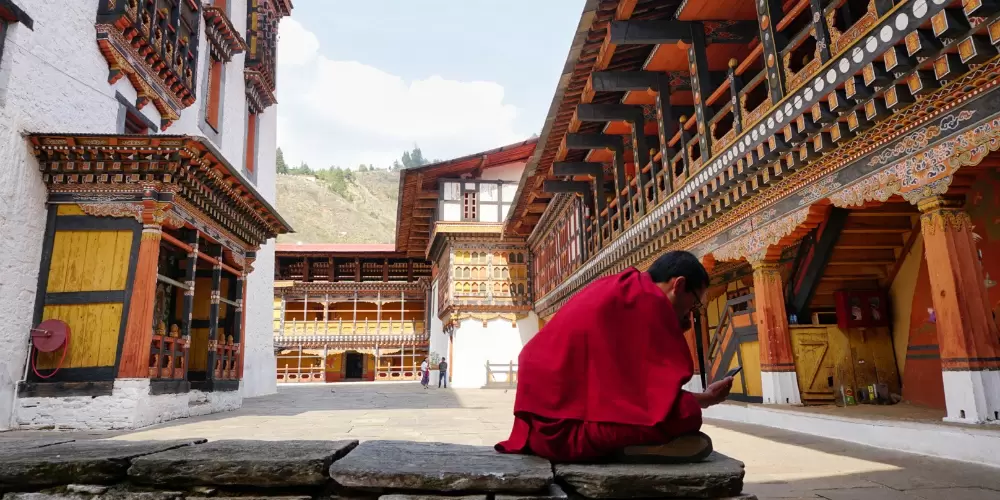


On resilience, change and the strength of a community that is far more than its role in mountain tourism
During a journey through the Himalayas, I was deeply impressed by the Sherpa community. Not only because of the endurance with which Sherpa climbers and guides work at high altitude, but especially because of the way a community has adapted to a changing world without completely surrendering its identity. That story is much larger than the ascent of Mount Everest. It is about what tourism does to a community, who benefits from it and what it takes not merely to undergo change, but to help shape it.
What does Sherpa mean?
Sherpa is the name of an ethnic community with roots in eastern Tibet and the mountainous regions of Nepal. The word is commonly understood to mean “people from the east”. A Sherpa is therefore not automatically a porter or mountain guide. The fact that the word has almost come to describe an occupation around the world shows how strongly the image of Himalayan expeditions has overshadowed the identity of an entire people.
Sherpa culture is connected to language, family, Tibetan Buddhism, trade routes and a landscape in which mountains are not only a sporting challenge, but also carry spiritual meaning. Those who look only at the role of Sherpas in expeditions may see their work, but do not necessarily see their world.
How has tourism changed the Sherpa community?
International recognition grew significantly after Tenzing Norgay and Edmund Hillary became the first confirmed climbers to reach the summit of Mount Everest on 29 May 1953. In the decades that followed, tourism developed rapidly in the Khumbu region. Work as guides, climbers, cooks, lodge owners and entrepreneurs generated new income and connected remote mountain villages to an international visitor economy.
This development created opportunities. Families invested in education, lodges, trading businesses and expedition companies. Infrastructure and communication improved. New generations could move between village life, the city and the international mountaineering world. The community was not simply changed by tourism, but also actively used tourism to build new positions.
Yet this is only one side of the story. An economy that becomes highly dependent on visitors is vulnerable too. Income is seasonal, the distribution of benefits is not automatically fair and the most dangerous work is often carried out by people who remain less visible in international narratives than the climbers they support. Resilience must therefore not become a romantic word that makes danger, inequality or economic dependency seem acceptable.
Why Sherpa should not be used as a synonym for porter
Words shape who we think we see. When “Sherpa” is used exclusively to describe someone who carries loads or helps another person reach the summit, a cultural identity is reduced to a supporting role. The entrepreneurship, leadership and expertise of Sherpas then disappear from view.
This representation is not harmless. It influences who is seen as the hero, who makes decisions and who receives the greatest economic value. New generations of Sherpa climbers and entrepreneurs are increasingly asking to be recognised as expedition leaders, athletes and owners of specialised companies. This is more than a change in job title. It marks a shift from supporting decisions to helping make them.
Resilience is not the same as enduring everything
From the outside, we often admire the ability of communities to cope with difficult conditions. But genuine resilience does not mean that people should continue carrying risk indefinitely. It emerges when a community has the knowledge, relationships, economic capacity and authority to make choices about its own future.
That distinction matters in tourism. A destination is not resilient simply because residents continually adapt to growing visitor numbers, climate risks or changing markets. It is resilient when residents have influence over the scale, form and benefits of tourism. Adaptability alone is not enough. Ownership makes the difference.
What destinations can learn from the Sherpa community
The story of the Sherpa people does not offer a simple model that other destinations can copy. Its history is too specific and its tensions are too real. It does, however, reveal several principles that matter for destination development.
- Let local knowledge lead. People who live in a landscape every day understand risks, rhythms and limits that often remain invisible to visitors.
- Build local ownership. Tourism becomes stronger when residents do not only provide labour, but also own businesses, make decisions and shape the stories being told.
- Distribute risk and benefits more fairly. Those who perform the most demanding or dangerous work deserve more than symbolic appreciation. They also need economic security and influence.
- Do not treat culture as a backdrop. Religion, rituals and community values are not additions to a tourism product. They form the living system in which tourism takes place.
- Make change open to discussion. Culture does not need to remain unchanged in order to be meaningful. The question is who decides which changes are desirable and who benefits from them.
Connection requires reciprocity
What moved me in the Himalayas was not the romantic image of people persevering under all circumstances. It was their interdependence. No expedition reaches the summit through individual willpower alone. Behind every visible achievement stand knowledge, preparation, trust and cooperation.
This also holds a broader lesson for tourism. Visitors rarely come only to take or to give. They temporarily enter a system of people, nature, history and expectations. Connection emerges only when they are willing to recognise what their presence demands and who makes the experience possible.
Why Sherpa’s Stories has this name
To me, the name Sherpa’s Stories does not refer to someone who takes over another person’s work or prescribes the route. A good sherpa knows the terrain, recognises risks that others cannot yet see and helps people find their own path. This is also how I approach tourism strategy: not by deciding from the outside what a destination should become, but by working together to reveal what is already there and which choices fit that identity.
Perhaps that is ultimately what the Sherpa community can teach us. Resilience does not come from fixing yourself in tradition, nor from embracing every change. It emerges from the ability to move without forgetting who the landscape belongs to, which values you want to preserve and who is walking beside you.
Isabel Mosk is a tourism strategist and founder of Sherpa’s Stories. She has worked with more than 50 destinations worldwide and specialises in tourism trends, strategy, positioning and storytelling.