
Travel that touches: how technology personalises travel
In an age of endless digital stimuli, travellers no longer want more choice. They want simplicity, clarity and, above all, relevance. Today’s traveller wants to be seen as an individual. According to Salesforce research, 73 percent of travellers expect companies to understand and anticipate their unique preferences. This is precisely where AI in tourism enters the picture.
Personalisation is changing the way we travel. From the moment of booking until after we return home, the experience can be tailored rather than generic. Not algorithms that shout, but systems that sense what matters. Travel becomes more intuitive, more human and therefore more valuable.
From suggestions to meaningful choices
In the past, anyone booking a trip could quickly become overwhelmed by the options. Technology now helps people filter, simplify and, above all, navigate. Booking platforms such as Airbnb and Kayak use machine learning to recognise personal preferences and respond to them in real time. The aim is not to offer more, but to select better.
Airbnb, for example, presents different accommodation to a family than to a solo traveller, based on behaviour, timing and group composition. Search filters are becoming smarter too. Kayak allows travellers to explore options using criteria such as apparent temperature, travel time or atmosphere, making travel planning feel increasingly bespoke.
The physical experience follows the same direction. Hotels such as citizenM allow guests to configure their room in advance, from lighting and temperature to entertainment preferences. The result is a stay that feels less like checking into a hotel and more like coming home.
Artificial intelligence as a quiet force
Artificial intelligence is the quiet force beneath many new tourism applications. AI can translate large amounts of data into individual insight, continuously analysing travel behaviour, preferences, timing, mood and context. Choices are no longer merely suggested, but anticipated. That is where personalisation begins to feel meaningful.
AI personalises not only what you see, but also when and how you see it. Imagine someone searching for a weekend away from the sofa in the evening. AI recognises the time, earlier patterns and preferences, and presents peaceful nature retreats rather than busy city breaks. Technology begins to feel like intuition rather than marketing.
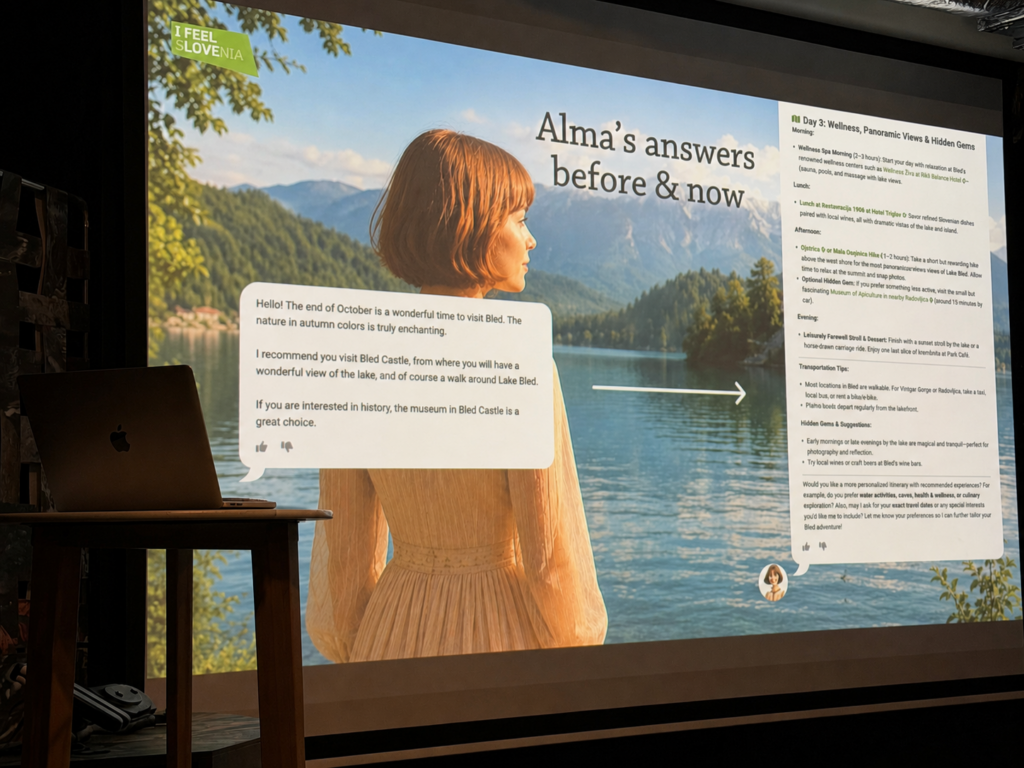
Generative AI takes this further. Traditional systems filtered existing options, while generative technology can design a journey around individual wishes. A simple prompt such as “a sustainable one-week tour with plenty of walking, good food and few tourists” can produce a personal itinerary in seconds. It is not a static package, but a dynamic proposal that can be adapted, expanded or booked.
Perhaps AI’s greatest strength is its ability to learn. The more often you interact with an AI agent, the better it understands your preferences. It learns not only what you select, but what you skip, where you hesitate and whether you tend to favour culture, tranquillity or adventure. Over time, it becomes a personal digital travel assistant that understands not only your tastes, but also your pace, style and travel rhythm.
AI can continue to support personalisation throughout the journey. Chatbots respond contextually, taking into account where you are and the time of day. Even after you return home, AI continues to adapt. Suggestions for future trips reflect your rhythm and preferences, memories are presented in a personal way and offers feel more like invitations than marketing. Traditional systems stopped at the booking; AI can build an ongoing relationship.
For travel companies, this represents a fundamental shift. AI is no longer merely an automated tool, but an interface for delivering personal hospitality at scale. According to Skift Research, more than 60 percent of travel companies are actively working on AI solutions designed to do exactly that: technology that not only optimises, but resonates.
Smart technology, human experiences
Technology is the means, not the goal. Its value depends on the empathy with which it is used. Travellers do not want to feel tracked; they want to feel recognised. Whether someone has just arrived after a long flight or is ready for fresh inspiration, context determines the right approach.
Digital solutions become powerful when they appear at the right moment in the experience. One example is the collaboration between Booking.com and TikTok in the United States. Users can book hotels directly from the videos they watch. The app recognises the location shown, connects it to user preferences and presents a booking option within the flow of the experience.
Cities are moving in the same direction. Singapore developed MySingaporeGuide, an app that offers personalised suggestions based on location, weather and individual interests. Whether a visitor is looking for art, food or nature, it can feel as if the city is moving with them.
The journey does not end when you return home
Personalisation is not limited to the journey itself. The experience continues afterwards, as travel companies send personalised emails, memory videos or suggestions for future destinations based on previous behaviour. The journey no longer ends at the moment of return.
According to Skift Research, more than 60 percent of travel organisations are investing in AI solutions that support this continuous personalisation. The focus is shifting from conversion to connection. Technology makes it possible, but the feeling of being recognised creates a lasting relationship.
The new standard in hospitality
Personalisation is no longer a future trend, but a basic expectation. In 2026, the difference lies in using technology in service of the human scale. Travellers do not want complex tools, but experiences that feel natural. They do not need an ocean of options, but the one suggestion that feels right.
For travel organisations, this means moving away from standardisation and towards flexibility and empathy. Whether it is a museum recommendation based on a previous city break or a breakfast option offered without having to ask, the value lies in the detail.
Travel that resonates is no longer a matter of chance. It can be shaped by technology that understands where you are, what you need and what you expect, even before you put it into words.
Isabel Mosk is a tourism strategist and founder of Sherpa’s Stories. She has worked for more than 50 destinations worldwide and advises organisations on tourism trends, strategy, positioning and storytelling.