

Why destination campaigns resemble each other and how things could be different.
In destination marketing, you see a striking pattern. Nature, tranquility, culture, enjoyment. If you compare the campaigns of Dutch tourist destinations, you see the same words recurring. Sometimes packaged as ‘space’, sometimes as ‘recharging’, sometimes as ‘enriching’ or ‘discovering’. The packaging differs. The promise is virtually identical.
This is striking, because the Netherlands invests heavily in destination marketing. DMOs, provinces, and regions invest time and money in brand strategy, positioning, target group research, and identity visions. Sometimes these are years-long processes, involving external agencies, extensive stakeholder processes, and well-founded conclusions.
And yet, when you look at the resulting campaigns, you see a pattern. Destinations want to stand out, but in the translation to campaigns, the sharpness disappears.
What happens in the translation
Not because the strategy is lacking. That is often there. But in the implementation, everything comes back again. Nature and culture. Adventure and tranquility. Culinary offerings and history. For all target groups, all year round. The result is a campaign that is for everyone, and therefore doesn’t really land for anyone.
The causes are diverse. Sometimes there are too many stakeholders at the table and everyone wants to see themselves reflected. Sometimes there is a lack of confidence to make a real choice. Sometimes a safe bet is made because a sharp choice provokes internal resistance. The result is always the same: choices are compromised.
But there is something else at play. In theory, it is often determined what constitutes a good campaign. But then the current state of the media landscape and how complex it has become is overlooked.
The media landscape has fundamentally changed
A single campaign ‘for everyone’ no longer exists in terms of media behavior. According to Newcom’s National Social Media Survey 2024, 14.3 million Dutch people use social media, but the platforms on which they are active vary greatly by age group. Generation Z is on TikTok, Gen X on Facebook, millennials on Instagram and podcasts, and the over-50s still read print and watch linear TV. Different generations, different platforms, different logics. A generic message that is rolled out broadly disappears in the noise.
In addition, the attention economy has rewritten the rules of the game. The first few seconds of a video determine everything. A thumbstopper is not a nice extra, it is a prerequisite. In the Dark Sky campaign for Terschelling, the video opened with a close-up of a boy wearing a space helmet. This was a conscious choice. It partly explains the completion rate of over 32%, while the benchmark for this type of video is around 15-20%.
At the same time, the algorithm rewards relevance, not reach. A specific message for a specific group performs better organically than a generic message for everyone. Niche works. Broad disappears.
And then there’s the execution itself. Nowadays, a good campaign requires knowledge of creative strategy, media buying, PR timing, influencer logic, and data analysis all at the same time. That no longer fits within one agency or one person. It requires a team of different experts who challenge each other, including people from the destination itself at the table. Because they are the experts on the place. That combination of outside knowledge and inside knowledge is exactly what makes the difference.
Because that is often the real hurdle. Not finding the right story, but implementing it. Internally. With administrators, entrepreneurs, and subsidy providers at the table, all wanting something different. The question is not just: what is our strongest story? The question is: how do you convince the room? The answer lies in figures and trust. Figures to prove that a sharp choice yields more than a broad message. And trust to give the campaign the space it needs. You build that trust by starting small, measuring and showing what it does.
What the Effie methodology teaches us
The Effie Award, internationally regarded as the most important prize for effective marketing, uses three questions in its assessment that actually form a strategic compass for every campaign:
1. What was the insight?
Not a fact about the target group, but a deeper understanding of their behavior, motivation, or tension. Something that explains why people do what they do and that gives a new perspective on the challenge.
2. What was the idea?
The creative core that translates that insight into a campaign that touches people and moves them. Not a slogan, but a story that is consistent across all channels.
3. What moved it?
The measurable impact: behavioral change, visitor growth, brand awareness. Proof that the campaign not only generated reach, but also changed something.
If you ask those three questions about the average destination campaign in the Netherlands, the answer to at least one of the three falls flat. Often already at the first one. A target group has been chosen, but there is no insight. A concept has been created, but there is no idea. There are reach figures, but no evidence of behavioral change.

Terschelling: what choosing yields
Easy to say, I hear you thinking. Terschelling is an island with one clear story. No twelve municipalities, no five sectors that all wanted to participate. And that’s true. But the principle applies to every destination. The unique story is always there. The question is whether you dare to choose it.
With the Dark Sky campaign for Terschelling, we started from an insight that was really accurate. In 2015, Terschelling was the first location in the Netherlands to receive the official Dark Sky designation, but did virtually nothing with it in terms of marketing. Meanwhile, sustainable tourism and nature experiences were growing strongly as trends, and the target group of ‘adventure seekers’ was looking for unique, authentic experiences off the beaten track.
That insight led to a clear choice: not to tell the whole story of the island, but to maximize one story. The darkest place in the Netherlands. An experience that really only exists here. One that is best enjoyed in the low season, exactly the period that the strategy focused on.
The campaign played on the childhood dream of becoming an astronaut: ‘You don’t have to be an astronaut to admire the stars. Nostalgic, emotional, and concrete enough to get people moving.
The results showed what choosing pays off: with a budget of €46,000, we reached 4.1 million people through the campaign. The media value was €1.3 million, almost thirty times the total campaign budget. The PR publications reached an additional 25 million people. The economic impact on the island: €268,846. That’s an ROI of over 580% on the campaign budget.
For a small destination like Terschelling, that is a huge victory. Not only in terms of figures, but also internally. Entrepreneurs, residents, and organizations on the island became proud. Something that is completely normal for them, looking at the stars at night, was suddenly seen as special by others. That feeling of recognition is perhaps the best basis for future collaboration.
But perhaps the strongest proof of effectiveness is that two years later, the campaign is still running. The Dark Sky package is still being booked. The impact has not only been demonstrated. It is continuously being demonstrated.
The campaign won an Effie Award in the Behaviour Short category. Not as an end in itself, but as confirmation that the approach was right: sharp insight, a clear idea and demonstrable behavioural change. And perhaps the most important message for any destination that thinks impact is only possible with big budgets: this was achieved with €46,000.
What also made this campaign special was that, for the first time, a Dutch destination marketing organization combined awareness and behavioral activation within a single campaign. DMOs are usually only responsible for the awareness layer. By collaborating with the tourist office, shipping company, and entrepreneurs, we were able to measure the entire chain: from initial contact to overnight stay.
The lesson
Effective destination marketing requires three things at once: a sharp story, an honest understanding of the media landscape, and the courage to implement it internally.
The pattern of nature, tranquility, culture, and enjoyment is not the result of a poor strategy. It is the result of too many voices in the implementation and too little confidence in the choice.
Destinations have wonderful and unique stories to tell. They rightly invest in finding those stories. But telling them requires something extra: the willingness to choose an insight that really says something, to let go of a target group that you do not serve, and to give a creative idea space, even if it feels uncomfortable for everyone involved at first.
A broad story reaches everyone and touches no one. A sharp story reaches fewer people. But it moves them. Are you working on a destination campaign and do you recognize this pattern? I’d be happy to brainstorm with you.
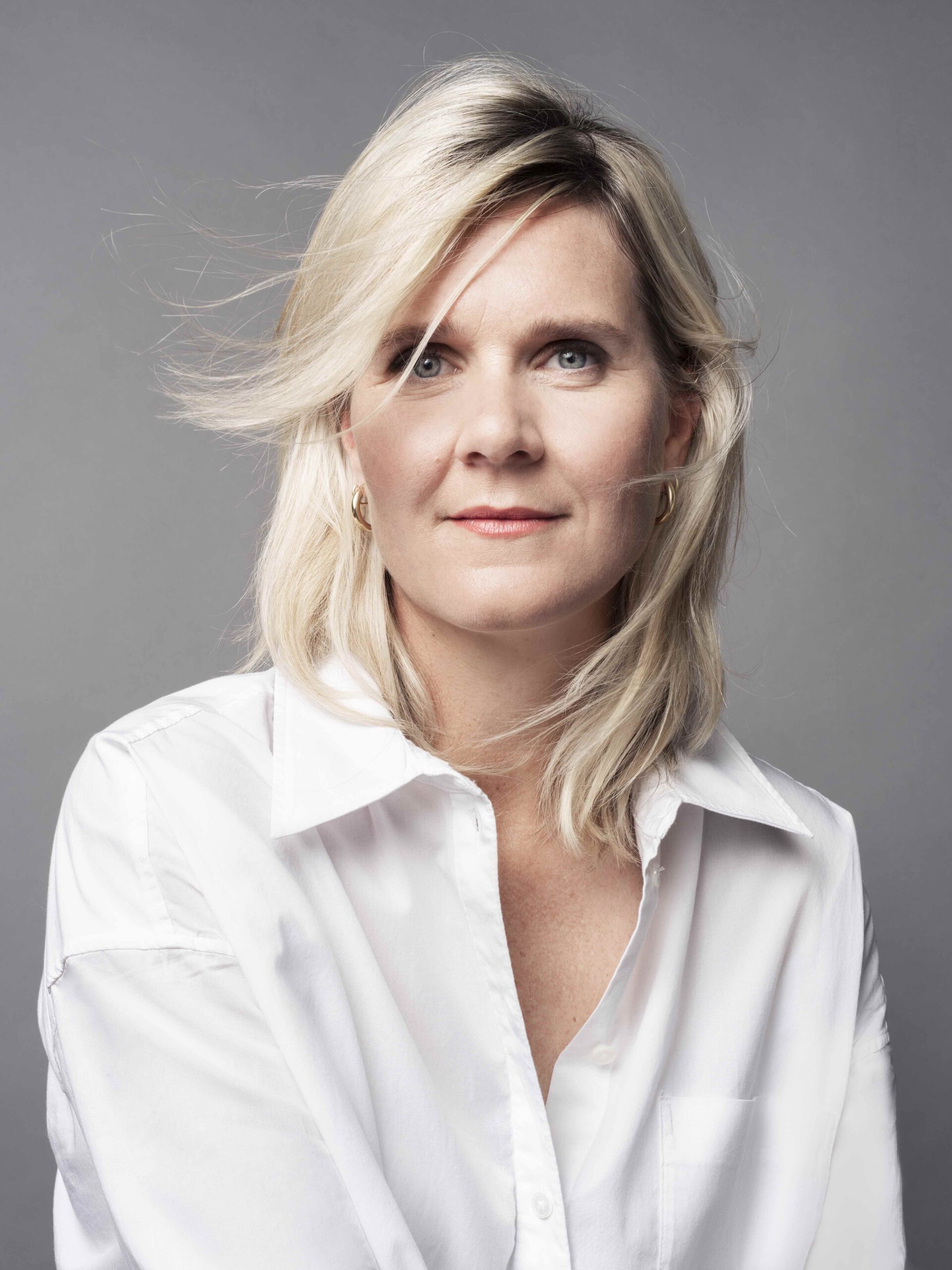
Isabel Mosk is a tourism strategist and founder of Sherpa’s Stories. She has worked for more than 50 destinations worldwide, visited 100 countries, and specializes in tourism trends, positioning, and storytelling.